
Pacific Alloy Casting Company manufactures cast steel parts for applications that require high strength, toughness, and durability. Steel castings are selected where performance under load, resistance to deformation, and structural integrity are critical to equipment reliability and service life.
This page provides an overview of cast steel materials produced by Pacific Alloy and serves as a gateway to more detailed steel alloy information.

Cast steel is widely used in industrial and structural applications due to its:
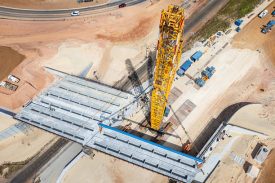

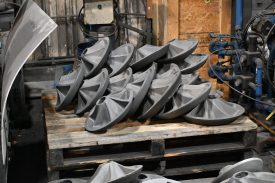
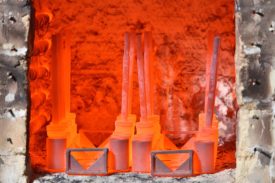
Steel castings are often selected for applications where iron alloys do not provide sufficient strength or impact resistance.
Steel castings produced by Pacific Alloy often support long-term production and replacement programs. Our approach focuses on:
This production-focused approach allows customers to rely on steel components that perform consistently over time.
ASTM A216 carbon steel castings are designed for pressure-containing service at moderate temperatures, providing a weldable and reliable option for valves, fittings, flanges, and other pressure parts in industrial piping systems. Available in grades WCA, WCB, and WCC with progressively higher strength and toughness, A216 is widely specified for general-purpose pressure service in steam, water, oil, and gas applications. Pacific Alloy manufactures A216 steel castings for valve bodies, fittings, and pressure-containing components across industrial and energy service environments.
| Property | Detail |
|---|---|
| Common Name / Type | Weldable carbon steel castings (specified by Grades WCA, WCB, WCC) |
| Material Class | Cast carbon steel — pressure-containing, fusion-weldable |
| Grade Designation Basis | Grades increase in strength: WCA (lowest), WCB (most common, general-purpose), WCC (highest strength); all designed for weld fabrication and high-temperature pressure service |
| Key Composition | C 0.25% max (WCB) / 0.25% (WCC) / 0.25% (WCA) with controlled carbon equivalent for weldability; Mn 0.70–1.20%, Si ≤ 0.60%, P ≤ 0.035%, S ≤ 0.035%, plus residual limits on Cu, Ni, Cr, Mo, V |
| Microstructure | Ferritic-pearlitic cast steel; normalized or normalized-and-tempered for property uniformity |
| Hardness | ~ 130–215 BHN (grade-dependent; WCC at the higher end) |
| Tensile Strength | WCA 60–85 ksi, WCB 70–95 ksi, WCC 70–95 ksi (grade minimums with ranges) |
| Yield Strength | WCA ≥ 30 ksi, WCB ≥ 36 ksi, WCC ≥ 40 ksi |
| Elongation | ~ 22–24% min depending on grade — genuine steel ductility, far above any cast iron |
| Toughness / Ductility | Good — true steel ductility and impact resistance; suitable for shock and dynamic loading |
| Standout Property | Weldable carbon steel castings rated for pressure-containing service at elevated temperature — combining steel's strength, ductility, and weld fabricability in cast form |
| Heat Treatability | Yes — supplied normalized, or normalized-and-tempered; can be annealed. Heat treatment is required to develop and certify the specified properties |
| Machinability | Good — machines like wrought carbon steel of similar carbon content; more effort than gray iron but straightforward with standard tooling |
| Weldability | Good — the defining feature; controlled carbon and carbon equivalent make it readily fusion-weldable with standard procedures, though preheat/PWHT may apply by section and grade |
| Corrosion / Oxidation Resistance | Low — plain carbon steel; requires coating or lining in corrosive or wet service; not for aggressive media |
| Temperature Range | Suited to elevated-temperature service within carbon-steel limits (generally up to ~ 800°F / 425°C before creep and graphitization concerns; alloy steels like A217 take over above that) |
| Relative Cost | Moderate — more than cast iron, economical among cast steels; widely produced |
| Pressure Service | Designed for pressure-containing components; commonly used for ASME/ANSI-rated valves and fittings within carbon-steel temperature limits |
| Best-Fit Applications | Valve bodies and bonnets, pump casings, pipe fittings and flanges, pressure-containing components, and weld-fabricated assemblies in steam, water, oil, and gas service |
| Not Recommended For | High-temperature service beyond carbon-steel limits (use A217 Cr-Mo grades), corrosive media without protection (use stainless A351/A995/A890), or extreme abrasion |
Notes: A216 is the standard weldable carbon steel casting for pressure service — the cast-steel equivalent of common wrought carbon steels, and the default when a valve, pump, or fitting body needs steel’s strength, ductility, and weldability rather than iron’s properties. WCB is by far the most common grade, the workhorse for general pressure-containing parts; WCA and WCC adjust strength down or up. The key reason to choose A216 over a cast iron is the combination of impact toughness, ductility, and the ability to weld-fabricate and weld-repair. When service temperature climbs beyond carbon steel’s limit, customers move to A217 (chromium-molybdenum alloy steel castings); when corrosion resistance is needed, to the stainless grades (A351, A995, A890).
ASTM A217 alloy steel castings are formulated for elevated-temperature and high-pressure service, making them the standard specification for pressure-containing components in steam power, petrochemical, and high-temperature process systems. Chromium-molybdenum and martensitic grades provide resistance to creep and deformation at temperatures where carbon steel is insufficient, enabling reliable long-term performance in demanding thermal service environments. Pacific Alloy manufactures A217 steel castings for steam valves, turbine components, and high-temperature pressure parts.
| Property | Detail |
|---|---|
| Common Name / Type | Chromium-molybdenum alloy steel castings and martensitic grades (specified by Grades WC1, WC4, WC5, WC6, WC9, WC11, C5, C12, C12A, CA15) |
| Material Class | Cast low-alloy (Cr-Mo) steel and martensitic stainless — pressure-containing, high-temperature service |
| Grade Designation Basis | Grades increase in chromium/molybdenum for higher-temperature capability: WC1/WC4/WC5/WC6 (low Cr-Mo), WC9 (2¼Cr-1Mo), C5 (5Cr-½Mo), C12/C12A (9Cr-1Mo), CA15 (12Cr martensitic stainless) |
| Key Composition | C ~ 0.05–0.20%, Cr from ~ 0.5% (WC1) up to 8–10% (C12/C12A) and ~ 11.5–14% (CA15), Mo 0.45–1.10%, Mn 0.30–0.80%, Si controlled; balance Fe |
| Microstructure | Bainitic/tempered structures in the Cr-Mo grades; tempered martensite in CA15; all supplied heat-treated for elevated-temperature strength and creep resistance |
| Hardness | ~ 170–250 BHN (grade-dependent; CA15 martensitic at the higher end) |
| Tensile Strength | ~ 70–105 ksi depending on grade (most Cr-Mo grades ~ 70–95 ksi; CA15 higher) |
| Yield Strength | ~ 40–60+ ksi depending on grade |
| Elongation | ~ 18–20% min depending on grade — good steel ductility |
| Toughness / Ductility | Good — retains ductility and impact resistance; designed for demanding pressure service |
| Standout Property | Elevated-temperature strength and creep resistance — the chromium and molybdenum let these grades hold properties at temperatures where carbon steel (A216) would fail by creep or graphitization |
| Heat Treatability | Yes — normalized-and-tempered or quenched-and-tempered (required to develop the specified high-temperature properties); CA15 hardens martensitically |
| Machinability | Fair — more difficult than plain carbon steel due to alloy content and hardness; the higher-Cr and martensitic grades (C12A, CA15) are the most challenging; standard but slower with appropriate tooling |
| Weldability | Fair — weldable with mandatory preheat and post-weld heat treatment (PWHT); the higher-Cr grades (C12A, CA15) demand strict procedure control to avoid cracking; weldability decreases as Cr content rises |
| Corrosion / Oxidation Resistance | Moderate to good — improves with chromium content; the 9Cr (C12A) and 12Cr (CA15) grades offer notable oxidation and mild-corrosion resistance; not equivalent to austenitic stainless |
| Temperature Range | High — these grades serve well above carbon-steel limits; the higher Cr-Mo grades (WC9, C12A) are mainstays of power-generation steam service to ~ 1100°F (~ 595°C) and beyond by grade |
| Relative Cost | Moderate to high — alloy content and required heat treatment raise cost above carbon steel castings; rises with Cr/Mo level |
| Best-Fit Applications | High-temperature/high-pressure valve and pump bodies, steam turbine components, boiler and superheater parts, fittings and casings in power generation, refining, and petrochemical service |
| Not Recommended For | Aggressive corrosive media requiring austenitic stainless, low-temperature service without verification of toughness, or applications where carbon steel (A216) suffices at lower cost |
Notes: A217 is where cast steel moves up to high-temperature, high-pressure duty. By adding chromium and molybdenum, these grades gain the creep resistance and elevated-temperature strength that plain carbon steel (A216) lacks above roughly 800°F — making A217 the backbone of valves, turbines, and boiler components in power generation and refining. Customers select the grade by service temperature and pressure: low Cr-Mo grades (WC1–WC6) for moderate elevation, 2¼Cr (WC9) and 9Cr (C12A) for progressively hotter steam service, and the martensitic CA15 where 12% chromium adds oxidation/corrosion resistance. The trade-offs versus A216 are higher cost and stricter welding/machining requirements (preheat and PWHT are typically mandatory). When the dominant challenge is corrosion rather than temperature, customers move to the austenitic or duplex stainless castings (A351, A995, A890).
ASTM A958 specifies steel castings by mechanical property class rather than chemical composition, allowing customers to match casting performance to the equivalent wrought steel grades they use in design. This flexibility makes A958 a practical choice for structural and mechanical components where defined strength, toughness, or hardness targets must be met across a range of alloy types. Pacific Alloy manufactures A958 steel castings for general structural, mechanical, and industrial equipment applications.
| Property | Detail |
|---|---|
| Common Name / Type | Steel castings matched to wrought alloy grades (specified by SAE-equivalent grade designations, e.g., 1020, 1030, 4130, 4140, 4330, 8620, 8630, etc., each with a strength class/grade) |
| Material Class | Cast carbon and alloy steel — chemistry matched to standard wrought grades, with specified tensile requirements |
| Designation Basis | Combines a familiar wrought grade number (defining chemistry) with a mechanical-property grade/class (defining the heat-treated strength level) — letting designers specify a casting in terms they already know from wrought steel |
| Key Composition | Mirrors the chosen wrought grade — e.g., 4140 ≈ 0.38–0.43% C, 0.75–1.0% Cr, 0.15–0.25% Mo, Mn ~ 0.75–1.0%; carbon and alloy content vary entirely by the selected grade |
| Microstructure | Depends on grade and heat treatment — ferritic-pearlitic (low-carbon grades) through tempered martensite (heat-treated alloy grades) |
| Hardness | Grade- and heat-treatment-dependent — from ~ 130 BHN (soft low-carbon) up to ~ 400+ BHN (quenched-and-tempered alloy grades) |
| Tensile Strength | Grade-dependent — roughly 60 ksi (low-carbon) up to ~ 200+ ksi (heat-treated alloy grades) |
| Yield Strength | Grade-dependent, scaling with tensile and heat treatment |
| Elongation | Grade-dependent — good ductility in lower-strength grades, reducing as strength rises |
| Toughness / Ductility | Grade-dependent — full range of steel behavior available, from tough and ductile to high-strength with reduced elongation |
| Standout Property | Lets designers order castings to the chemistry and properties of familiar wrought alloy grades (1020, 4140, 8620, etc.) — bridging wrought-steel design practice and cast production |
| Heat Treatability | Yes — the alloy grades respond fully to normalizing, annealing, quenching, and tempering; heat treatment is how the specified property class is achieved |
| Machinability | Grade-dependent — low-carbon grades machine readily; medium-carbon and alloy grades (4140, 4340) are more demanding, often machined before final hardening; carburizing grades (8620) machined soft then case-hardened |
| Weldability | Grade-dependent — low-carbon grades weld readily; medium-carbon and alloy grades require preheat and PWHT; weldability decreases as carbon and alloy content rise |
| Corrosion / Oxidation Resistance | Low — these are carbon and low-alloy steels, not stainless; require protection in corrosive service |
| Relative Cost | Moderate — varies with the alloy grade and heat treatment specified; alloy grades and higher property classes cost more |
| Best-Fit Applications | General mechanical and structural castings where a designer wants a known wrought grade in cast form — gears, shafts, levers, brackets, machine components, and parts later carburized or through-hardened (e.g., 8620 cast gears, 4140 cast machine parts) |
| Not Recommended For | Pressure-containing service governed by dedicated specs (use A216/A217), corrosion service (use stainless grades), or applications where a property-only spec like A27/A148 is more appropriate |
Notes: A958 is the specification that lets engineers order steel castings by the wrought-grade language they already use. Rather than learning a separate set of casting grades, a designer can call out, for example, cast 4140 at a given strength class, and get a casting whose chemistry matches the familiar wrought alloy and whose properties are certified to a chosen tensile class. This makes it especially useful when a part is being converted from a machined or forged wrought component to a casting, or when downstream heat treatment (through-hardening, carburizing) is planned around a known grade’s response. The trade-off is that A958 covers general carbon and alloy steels — for pressure-containing parts, dedicated specs (A216/A217) apply, and for corrosion resistance, the stainless castings take over.
ASTM A27 carbon steel castings are an economical and weldable option for general-purpose structural and industrial applications where moderate strength and ease of fabrication are the primary requirements. Available in multiple grades from soft, easily weldable carbon steel to higher-strength variants, A27 is widely used for machinery frames, brackets, housings, and structural parts that do not require the higher alloy content of specialized grades. Pacific Alloy manufactures A27 steel castings for a broad range of general manufacturing and industrial equipment applications.
| Property | Detail |
|---|---|
| Common Name / Type | General-purpose carbon steel castings (specified by grade, e.g., Grade 60-30, 65-35, 70-36, 70-40, plus low-strength grades N-1, N-2, U-60-30) |
| Material Class | Cast carbon steel — general application, mild/low-carbon |
| Grade Designation Basis | Two numbers = min tensile strength (ksi) – min yield strength (ksi) (e.g., 65-35 = 65 ksi tensile, 35 ksi yield). N-grades are chemistry-only (no mechanical requirement); U-grade specifies tensile only |
| Key Composition | C 0.25–0.35% max (grade-dependent), Mn 0.60–0.80%, Si ≤ 0.80%, P ≤ 0.04%, S ≤ 0.045%; plain carbon steel with modest manganese |
| Microstructure | Ferritic-pearlitic cast steel; typically supplied annealed, normalized, or normalized-and-tempered |
| Hardness | ~ 120–200 BHN (grade-dependent) |
| Tensile Strength | 60–70 ksi depending on grade |
| Yield Strength | 30–40 ksi depending on grade |
| Elongation | ~ 22–28% min depending on grade — good steel ductility |
| Toughness / Ductility | Good — genuine steel ductility and impact resistance; suitable for shock and dynamic loads, far above any cast iron |
| Standout Property | Economical, weldable general-purpose steel casting — the baseline cast steel when steel properties are needed without special strength, pressure, or alloy requirements |
| Heat Treatability | Yes — annealed, normalized, or normalized-and-tempered to develop and certify properties; responds to standard carbon-steel heat treatment |
| Machinability | Good — machines like wrought mild steel; straightforward with standard tooling, more effort than gray iron but predictable |
| Weldability | Good — low carbon content makes it readily weldable with standard procedures; one of the more weld-friendly cast steels, suitable for weld fabrication and repair |
| Corrosion / Oxidation Resistance | Low — plain carbon steel; requires coating or protection in corrosive or wet service |
| Relative Cost | Low to moderate — among the most economical cast steels; widely produced for general use |
| Section-Size Sensitivity | Moderate — heavier sections cool slower; heat treatment is sized to achieve uniform properties |
| Best-Fit Applications | Machinery frames and housings, brackets and levers, gear blanks, base plates, couplings, rail and mining hardware, and general structural/mechanical parts needing steel's strength and ductility at low cost |
| Not Recommended For | Pressure-containing service (use A216), high-strength applications (use A148), corrosion service (use stainless grades), or high-temperature service (use A217) |
Notes: A27 is the baseline general-purpose carbon steel casting — the go-to when a part needs the strength, ductility, and weldability of steel rather than iron, but doesn’t require pressure rating, high strength, alloying, or corrosion resistance. Its low carbon content makes it economical, easy to weld, and easy to machine, which is why it’s specified across general machinery, structural, and mechanical components. Customers select the grade by the modest strength level required. When the application steps up in demand, the path is clear: A148 for high-strength low-alloy castings, A216 for weldable pressure service, A217 for high-temperature pressure service, and the stainless grades for corrosion. The N- and U-grades exist for cases where only chemistry (for weldability or carburizing) or only a tensile minimum needs to be specified.
ASTM A148 covers high-strength steel castings for structural and load-bearing applications, offering a wide range of grades with tensile strengths from 80 ksi to over 200 ksi for the most demanding mechanical performance requirements. The low-alloy grades provide a combination of high strength and toughness suited to heavy equipment, mining machinery, and structural components exposed to impact and dynamic loading. Pacific Alloy manufactures A148 steel castings for structural, mining, and heavy-duty industrial applications where high strength and toughness are critical.
| Property | Detail |
|---|---|
| Common Name / Type | High-strength structural steel castings (specified by grade as tensile-yield pairs, e.g., 80-40, 80-50, 90-60, 105-85, 115-95, 130-115, 135-125, 150-135, 160-145, 165-150, 210-180, 260-210) |
| Material Class | Cast carbon and low-alloy steel — high-strength, structural |
| Grade Designation Basis | Two numbers = min tensile strength (ksi) – min yield strength (ksi) (e.g., 105-85 = 105 ksi tensile, 85 ksi yield); spans a very wide strength range up to 260-210 |
| Key Composition | Not fixed by the standard — composition is chosen by the producer (carbon or low-alloy steel, e.g., Cr-Mo, Ni-Cr-Mo) to meet the specified mechanical grade; higher grades require alloying |
| Microstructure | Quenched-and-tempered martensitic/bainitic structures in the higher grades; lower grades may be normalized-and-tempered |
| Hardness | Grade-dependent — from ~ 160 BHN (lower grades) up to ~ 500+ BHN (highest grades) |
| Tensile Strength | 80–260 ksi depending on grade |
| Yield Strength | 40–210 ksi depending on grade |
| Elongation | Grade-dependent — good ductility in lower grades (~ 18–22%), decreasing as strength rises (down to a few percent in the highest grades) |
| Toughness / Ductility | Good and grade-tunable — lower grades combine high strength with toughness; supplementary impact (Charpy) requirements can be specified, including low-temperature grades |
| Standout Property | Very high strength in cast form, specified purely by mechanical properties — lets designers obtain forged-steel-level strength in complex cast geometries |
| Heat Treatability | Yes — quench-and-temper (or normalize-and-temper) is essential to achieve the higher grades; heat treatment is integral to the specification |
| Machinability | Fair to challenging — decreases as strength rises; high grades are best machined before final hardening, then finish-ground; standard tooling adequate for lower grades |
| Weldability | Fair, grade-dependent — lower grades weld with preheat and procedure control; higher-strength alloy grades require strict preheat, controlled hydrogen, and PWHT; weldability decreases with strength/alloy content |
| Corrosion / Oxidation Resistance | Low — carbon and low-alloy steels; require protective coatings in corrosive service |
| Relative Cost | Moderate to high — rises with strength grade due to alloying and heat treatment; well below the cost of fabricating equivalent forgings in many cases |
| Section-Size Sensitivity | Significant — hardenability must carry through section; higher grades in heavy sections require alloy additions to achieve uniform properties |
| Best-Fit Applications | Heavy structural and machinery castings — crane and excavator components, mining and earthmoving parts, gears and gear cases, frames, brackets, railroad and off-highway parts, and high-load structural members needing strength with toughness |
| Not Recommended For | Pressure-containing service (use A216/A217), corrosion service (use stainless grades), or general low-strength parts where A27 is more economical |
Notes: A148 is the high-strength end of structural steel castings, specified entirely by mechanical properties so designers can call out exactly the tensile and yield they need — from 80 ksi up to an exceptional 260 ksi — and leave the producer to select chemistry and heat treatment to hit it. This makes it the choice for heavily loaded structural and machinery parts where A27’s modest strength falls short, and an economical route to forged-strength performance in complex cast shapes. The defining considerations are that higher grades depend on alloying and quench-and-temper heat treatment, machinability and weldability decline as strength climbs, and heavy sections need hardenability planning. Customers needing impact toughness can invoke the supplementary Charpy requirements, including low-temperature grades. When the requirement is pressure containment or corrosion rather than raw structural strength, the dedicated pressure (A216/A217) or stainless (A351/A995/A890) specs apply instead.
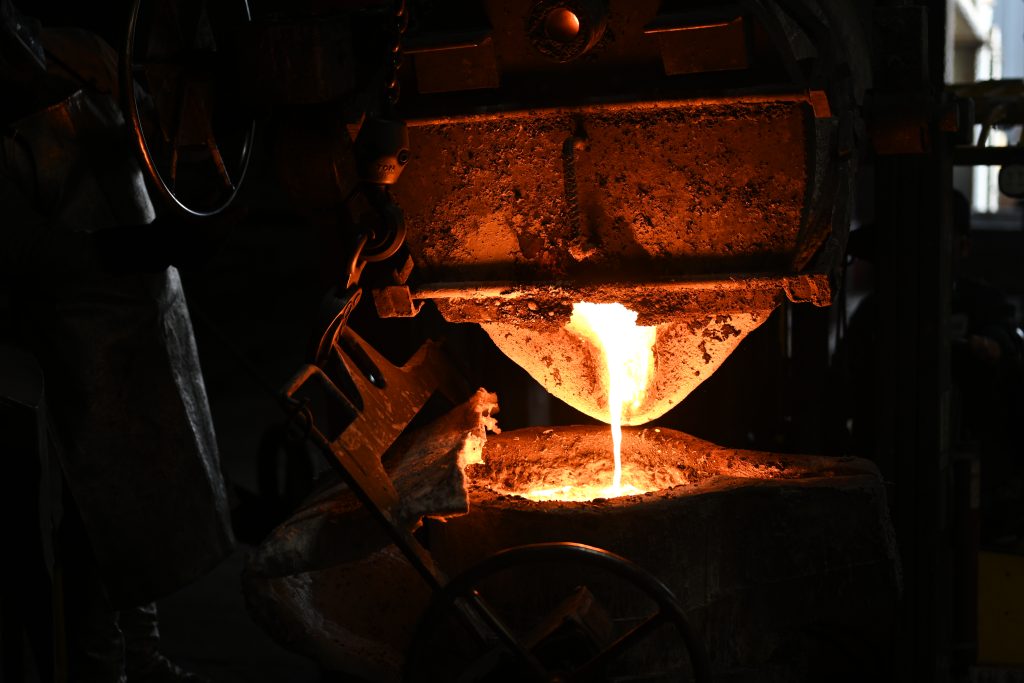
Selecting the right steel alloy is only part of producing a successful casting. Pacific Alloy combines material expertise with controlled manufacturing processes to support:
Additional information on manufacturing processes is available on the Capabilities page.
If you’re evaluating iron castings for a specific application and need guidance on material selection or production capability, Pacific Alloy’s team is available to help.
Discuss Your Casting Requirements
📞 562-928-1387
✉️ sales@pacificalloy.com
Early-stage discussions welcome. NDAs available.