
Pacific Alloy Casting Company manufactures castings in a wide range of metals and alloys selected to meet the demands of high-wear, high-impact, and industrial service environments. Material selection plays a critical role in casting performance, wear life, and long-term reliability.
This guide provides an overview of the primary metals and alloys Pacific Alloy works with and serves as a starting point for understanding how material choice supports specific applications.
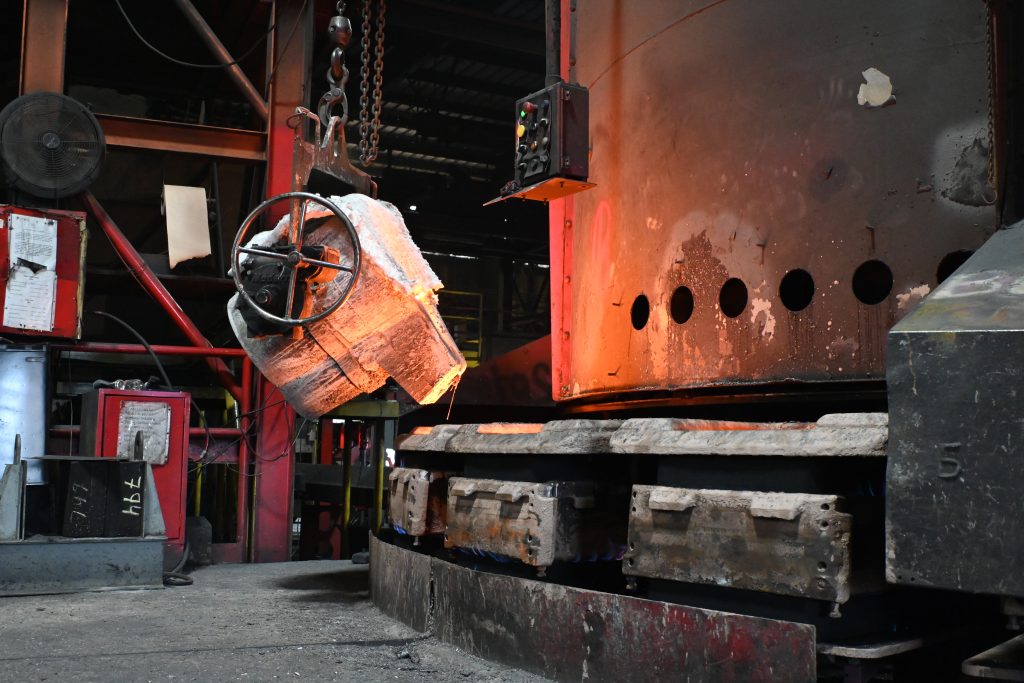
Corrosion-resistant and high-termperature applicaitons
Cast iron remains a widely used material in industrial manufacturing due to its:

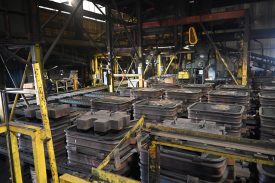

Different operating environments place different demands on cast components. Factors such as abrasion, impact, load, temperature, and service life expectations all influence material selection.
Pacific Alloy works with customers to:
Detailed performance characteristics and use cases are addressed on individual alloy pages.
| ASTM Spec | Common Name / Type | Key Composition | Typical Hardness | Tensile Strength | Standout Property | Best-Fit Applications |
|---|---|---|---|---|---|---|
| A532 Grade I (Ni-Cr-HiC) | Ni-Hard 1, high-Cr white iron | ~3.3% C, 1.5–2.6% Cr, 3–5% Ni | 550–650 BHN | Low (brittle) | Extreme abrasion resistance | Crusher liners, slurry pumps, mill components |
| A532 Grade II (Ni-Cr-LoC) | Ni-Hard 4 type | Lower C, 1.5–2.6% Cr, Ni added | 525–625 BHN | Low (brittle) | Abrasion + slightly better toughness | Pump casings, classifier shoes |
| A532 Grade IIB | 12% Cr white iron | ~2.4–3.6% C, 11–14% Cr | 450–550 BHN (as-cast) | Low | Abrasion + moderate impact, heat-treatable | Mining wear parts, grinding equipment |
| A532 Grade IIIA | 25% Cr white iron | ~2.0–3.3% C, 23–28% Cr | 450–600 BHN | Low | High abrasion + corrosion/oxidation resistance | Pumps, brick dies, corrosive slurries |
| A48 | Gray cast iron | High C with flake graphite | Class-dependent (150–270 BHN) | 20–60 ksi (by class) | Damping, machinability, low cost | Engine blocks, housings, manifolds, machine bases |
| A126 | Gray iron for valves/fittings | Graded A/B/C | ~160–220 BHN | 21–41 ksi | Pressure-rated gray iron | Valve bodies, pipe fittings, flanges |
| A436 | Austenitic (Ni-Resist) gray iron | High Ni, austenitic matrix | 130–250 BHN | 25–45 ksi | Corrosion, heat & wear resistance, non-magnetic | Pumps, marine parts, exhaust manifolds |
| A536 | Ductile (nodular) iron | Spheroidal graphite | 140–300+ BHN (by grade) | 60–120 ksi | High strength + ductility vs. gray iron | Gears, crankshafts, housings, automotive |
| A897 | Austempered Ductile Iron (ADI) | Ductile iron, austempered | 269–477 BHN (by grade) | 125–230 ksi | Steel-like strength at lower weight/cost | Gears, suspension, heavy-duty wear parts |
| A439 | Austenitic ductile (Ductile Ni-Resist) | High Ni, nodular graphite | 130–230 BHN | 55–70 ksi | Corrosion/heat resistance + ductility | High-temp pumps, turbocharger housings |
| A216 | Carbon steel castings (weldable) | WCA/WCB/WCC carbon steel | ~130–215 BHN | 60–95 ksi | Weldable, moderate-temp pressure service | Valves, fittings, pressure-containing parts |
| A217 | Alloy steel castings (high-temp) | Cr-Mo / martensitic grades | ~170–250 BHN | 70–105 ksi | Elevated-temp & creep resistance | Steam valves, turbines, power-gen parts |
| A958 | Steel castings to wrought equivalents | Various (SAE-grade matched) | Grade-dependent | Grade-dependent | Specifies castings by mechanical property class | General structural/mechanical castings |
| A27 | Carbon steel castings (general) | Mild/low-carbon steel | ~120–200 BHN | 60–85 ksi | Economical, weldable general-purpose | Machinery frames, brackets, general parts |
| A148 | High-strength steel castings | Low-alloy steel | Up to ~400+ BHN (by grade) | 80–200+ ksi | Very high strength/toughness range | Structural, mining, heavy equipment |
| A351 | Austenitic/duplex stainless castings | CF8/CF8M (304/316 type) | ~140–190 BHN | 65–80 ksi | Corrosion resistance, low-temp service | Valves, pumps, chemical/food processing |
| A995 | Duplex stainless steel castings | Ferritic-austenitic duplex | ~217–310 BHN | 90–130 ksi | High strength + superior corrosion/chloride resistance | Marine, chemical, oil & gas pressure parts |
| A890 | Duplex/super-duplex stainless castings | Various duplex grades | ~210–310 BHN | 90–130 ksi | Pitting/stress-corrosion resistance | Seawater, pulp & paper, chemical service |
| A297 | Heat-resistant Fe-Cr-Ni castings | High Cr-Ni (HC–HW grades) | Grade-dependent | 60–95 ksi | Withstands very high temperatures (oxidation) | Furnace parts, heat-treat fixtures, kilns |
| A447 | Heat-resistant Ni-Cr castings | High Ni-Cr alloy | Grade-dependent | ~70–95 ksi | Strength + oxidation resistance at high temp | Furnace components, high-temp industrial parts |
Hi-chrome iron alloys are commonly used in applications requiring excellent abrasion resistance combined with impact tolerance. These alloys are frequently selected for severe service environments such as mining, aggregate processing, cement, asphalt, and crushing applications.
Ni-Hard iron alloys are engineered for high abrasion resistance in low- to moderate-impact environments. They are widely used in industries such as asphalt, cement, concrete, sand and gravel, and other material-handling applications where wear life is critical.
Gray iron offers good machinability, vibration damping, and strength for a variety of industrial applications. It is commonly used in oil and water systems, mining equipment, fitness equipment, and general manufacturing applications.
Austenitic gray iron (Ni-Resist) is engineered for environments where standard gray iron degrades rapidly, providing superior resistance to corrosion, oxidation, and wear at elevated temperatures. Its high-nickel austenitic matrix is also essentially non-magnetic, making it suitable where magnetic permeability is a concern. Common applications include pump and valve components, oilfield equipment exposed to sour gas, chemical processing equipment, and marine service.
Ductile iron provides improved strength and toughness compared to gray iron, making it suitable for applications requiring impact resistance and structural integrity. Common uses include mining, agriculture, construction, wastewater, and industrial equipment.
Ductile iron provides improved strength and toughness compared to gray iron, making it suitable for applications requiring impact resistance and structural integrity. Common uses include mining, agriculture, conAustempered ductile iron (ADI) delivers steel-level strength and wear resistance at lower weight and cost, making it a practical alternative to steel for high-performance structural and wear applications. The austempering heat treatment produces a microstructure that combines high tensile strength with fatigue resistance not achievable with standard ductile iron. ADI is widely used in gears, mining and earth-moving equipment, agricultural machinery, and structural components where durability and weight savings are both priorities.struction, wastewater, and industrial equipment.
Austenitic ductile iron (Ductile Ni-Resist) combines the corrosion and heat resistance of the Ni-Resist alloy family with the strength and ductility of nodular graphite, making it suitable for demanding thermal and chemical service environments. It performs across a wide temperature range, including cryogenic conditions, and is essentially non-magnetic. Typical applications include turbocharger housings, pump and valve bodies for corrosive or high-temperature fluids, and chemical processing equipment.
Carbon and alloy steel castings provide a weldable, high-strength option for structural, pressure-containing, and mechanically demanding applications. Grades span from economical general-purpose carbon steels to elevated-temperature and high-strength low-alloy grades for severe service. Common applications include valves and fittings, pressure vessel components, machinery frames, and heavy-duty structural and mining equipment.
Stainless steel alloys are selected for applications requiring corrosion resistance, strength, and cleanliness. Typical uses include industrial equipment, automotive and aerospace components, medical equipment, food and beverage processing, and architectural applications.
In addition to standard alloy grades, Pacific Alloy works with custom ferrous alloy compositions to meet specific performance requirements. These alloys are developed to support unique applications, specialized equipment, or non-standard service conditions.
Casting capacity varies based on alloy composition and volume requirements.
Material selection is only one part of producing a successful casting. Pacific Alloy combines alloy expertise with controlled manufacturing processes to ensure consistency and repeatability across production runs.
Additional information on manufacturing processes and in-house capabilities is available on the Capabilities page.
If you have questions about alloy selection, mechanical properties, or material suitability for a specific application, Pacific Alloy’s team is available to help.
Discuss Your Product Requirements
 562-928-1387
 sales@pacificalloy.com