
Pacific Alloy Casting Company manufactures Ni-Hard white iron castings in accordance with ASTM A532. Ni-Hard is a nickel- and chromium-alloyed white cast iron developed specifically for low-impact, sliding abrasion environments.
Ni-Hard has served as an industry standard for abrasion resistance for decades and remains widely used where predictable wear performance and long service life are required.
Ni-Hard is a white cast iron alloyed primarily with nickel and chromium. The nickel promotes a martensitic matrix, while chromium contributes to carbide formation, producing a hard, wear-resistant microstructure.
This combination provides:
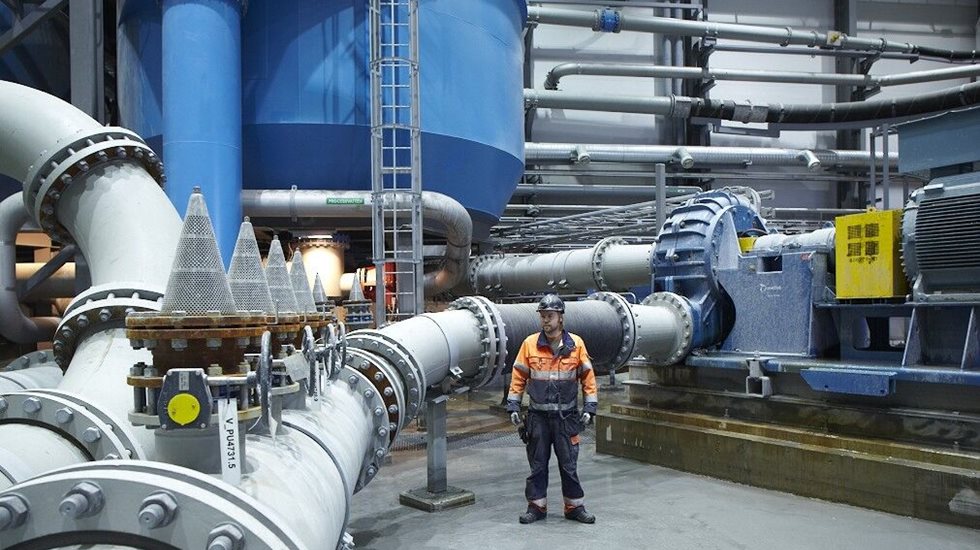
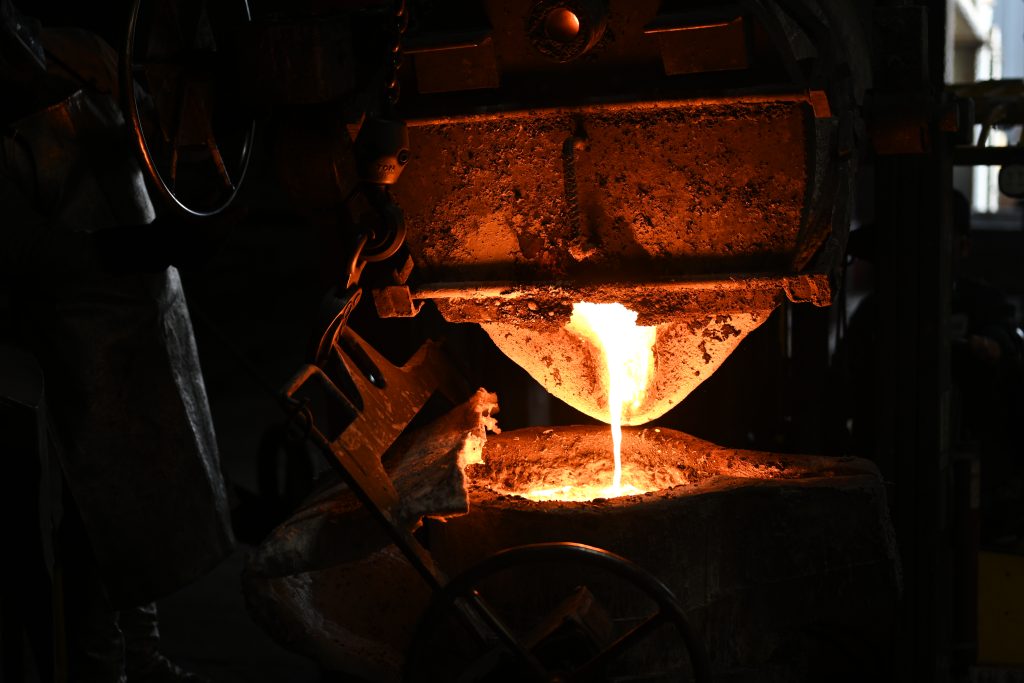
ASTM A532 defines several classes of white cast irons alloyed to improve resistance to abrasive wear. These irons are characterized by a hard, carbide-rich microstructure that provides exceptional wear resistance in sliding and erosive environments.
While ASTM A532 includes multiple alloy classes, the majority of industrial abrasion-resistant castings fall into two primary alloy families:
Each alloy family offers distinct performance characteristics suited to different service conditions.
Ni-Hard is a nickel-alloyed white cast iron that has served as an industry standard for abrasion resistance for more than six decades.
Key characteristics include:
Typical applications include:
Common Ni-Hard castings include mixer liners, mill liners, mixer tips, and slurry pump components.
Hi-chrome white irons, often referred to as Hi-Chrome or Chrome Carbide, contain elevated chromium levels to improve abrasion resistance and toughness.
Key characteristics include:
Typical applications include:
High-chrome iron is often selected when abrasion resistance must be combined with additional toughness or corrosion resistance.
Choosing between Ni-Hard and high-chrome iron depends on several factors, including:
Pacific Alloy works with customers to evaluate these factors and recommend the most appropriate ASTM A532 alloy for the application.
Ni-Hard castings produced to ASTM A532 offer:
Compared to high-chrome white irons, Ni-Hard is typically selected for lower-impact abrasion conditions.
Typical applications for Ni-Hard include:
Pacific Alloy manufactures Ni-Hard components used in industries such as:
Common Ni-Hard castings include mixer liners, mill liners, mixer tips, and slurry pump components.
These applications rely on materials that resist steady abrasion while maintaining dimensional stability.
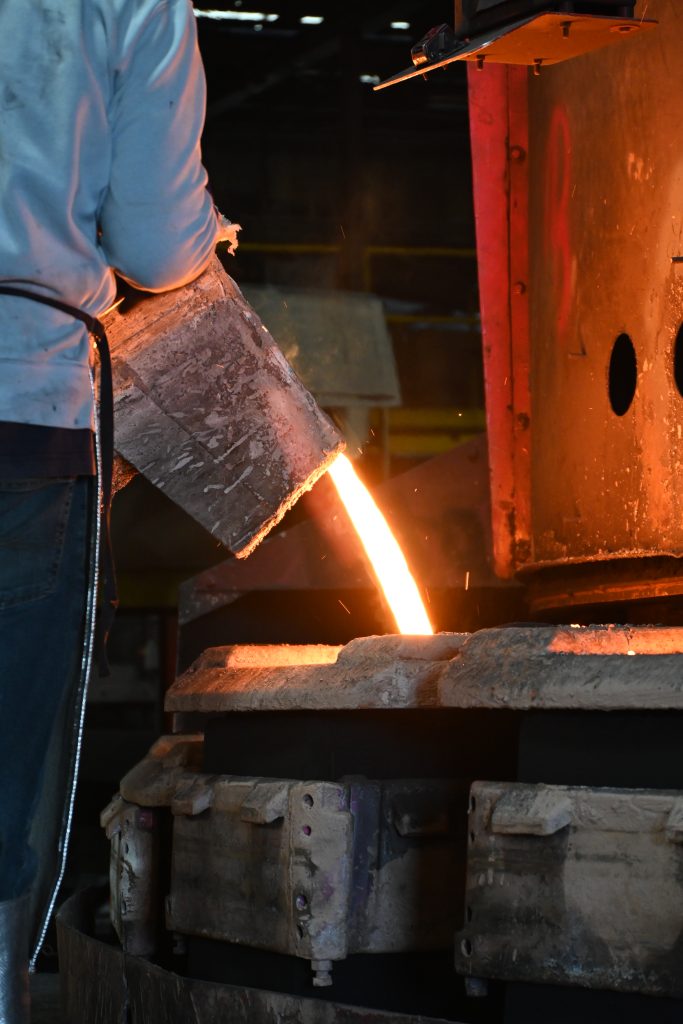
Ni-Hard Grade I is a nickel-chromium white iron developed for low-impact, sliding abrasion service, achieving high hardness directly as-cast without additional heat treatment. The nickel alloying promotes a martensitic matrix that delivers consistent hardness throughout the casting cross-section, making it a reliable and cost-effective choice for continuous wear applications. It is widely used in power generation, asphalt, cement, and aggregate processing for components such as mill liners, slurry pump parts, and shot-blast equipment.
Ni-Hard Grade I castings offer a proven wear performance profile for fine-particle, low-impact abrasion environments:
| Property | Detail |
|---|---|
| Common Name / Type | Ni-Hard; Class I nickel-chromium white iron (includes Types A, B, C, D depending on composition) |
| Material Class | Low-chromium, nickel-alloyed white iron (abrasion-resistant) |
| Key Composition | C 2.4–3.6%, Ni 3.3–5.0% (Type D higher), Cr 1.4–2.4% (Type D up to ~9%), Mn up to 2.0%, Si up to 1.5% |
| Microstructure | M₃C eutectic carbides in a martensitic matrix; nickel suppresses pearlite formation to develop hardness as-cast |
| Hardness — As-Cast | ~ 550–650 BHN (typically usable as-cast without further hardening) |
| Hardness — After Stress Relief / Temper | ~ 550–625 BHN (low-temperature treatments relieve stress without major hardness loss) |
| Tensile Strength | Low / not a design parameter — consumed in abrasion and compression, not tension |
| Toughness / Ductility | Low; brittle — the continuous M₃C carbide network gives less impact resistance than the discrete-carbide high-Cr grades (IIB/IIIA) |
| Standout Property | Develops high abrasion-resistant hardness directly as-cast through nickel alloying — economical, proven, and widely used for fine-particle abrasion |
| Heat Treatability | Limited — generally used as-cast; low-temperature stress-relief/tempering is applied, but it is not hardened-and-tempered the way the high-Cr grades are |
| Machinability | Poor. Hard martensitic/carbide structure requires grinding or CBN/diamond tooling; design for grinding rather than conventional machining |
| Weldability | Poor / not recommended. High crack sensitivity; repair welding only with high preheat and specialized electrodes. Avoid structural welding. |
| Corrosion / Oxidation Resistance | Low — the modest chromium content offers little corrosion or oxidation resistance; not suited to corrosive media |
| Relative Cost | Moderate — the nickel content adds cost over plain white iron, but typically lower-cost than the high-Cr 25% grade (IIIA); a long-established economical wear material |
| Section-Size Sensitivity | Moderate to high — the continuous carbide structure and as-cast hardening make heavy sections more prone to cracking and uneven properties |
| Best-Fit Applications | Fine-particle abrasion: slurry and sand pump parts, grinding mill liners, ball-mill components, shot-blast equipment, pulverizer parts, and chute/hopper liners in dry abrasion service |
| Not Recommended For | Corrosive environments, high-impact shock loading, tensile/structural parts, weld-fabricated assemblies, or parts needing significant machining |
Notes: Grade I (Ni-Hard) is the original, economical workhorse white iron. It reaches high hardness as-cast without the heat-treatment step the high-Cr grades require, which keeps it cost-effective for straightforward dry-abrasion duty. The trade-off is its continuous carbide network — it’s more brittle and less impact-tolerant than Grade IIB, and its low chromium means little corrosion resistance versus Grade IIIA. Customers choose Grade I when the wear is fine-particle abrasion in a non-corrosive, low-impact setting and cost matters; they step up to IIB for impact tolerance or IIIA for corrosion.
Ni-Hard Grade II is a lower-carbon variant of the Ni-Hard family that trades a portion of abrasion resistance for improved toughness, making it the preferred choice when service conditions include some impact loading alongside abrasion. The reduced carbide volume produces a more damage-tolerant microstructure while retaining the proven hardness and wear performance of the Ni-Hard alloy system. Typical applications include pump casings and volutes, classifier shoes, and grinding components where Grade I would be susceptible to chipping or cracking.
Ni-Hard Grade II castings offer improved durability for abrasion environments where some impact is present:
| Property | Detail |
|---|---|
| Common Name / Type | Ni-Hard type; lower-carbon nickel-chromium white iron variant within the Class I family |
| Material Class | Low-chromium, nickel-alloyed white iron (abrasion-resistant) |
| Key Composition | C 2.4–3.0% (lower than Grade I), Ni 3.3–5.0%, Cr 1.4–2.4%, Mn up to 2.0%, Si up to 1.5% |
| Microstructure | M₃C carbides in a martensitic matrix; reduced carbon lowers total carbide volume, trading some abrasion resistance for improved toughness |
| Hardness — As-Cast | ~ 525–600 BHN |
| Hardness — After Stress Relief / Temper | ~ 525–600 BHN (low-temperature treatments relieve stress with minimal hardness loss) |
| Tensile Strength | Low / not a design parameter — used in abrasion and compression, not tension |
| Toughness / Ductility | Low, but slightly better than Grade I — the reduced carbide volume gives somewhat improved impact resistance for a white iron |
| Standout Property | Better toughness than Grade I while retaining strong abrasion resistance — the lower-carbon Ni-Hard choice for service with some impact loading |
| Heat Treatability | Limited — generally used as-cast with low-temperature stress-relief/tempering; not hardened-and-tempered like the high-Cr grades |
| Machinability | Poor. Hard structure requires grinding or CBN/diamond tooling; design for grinding rather than conventional machining |
| Weldability | Poor / not recommended. High crack sensitivity; repair welding only with high preheat and specialized electrodes. Avoid structural welding. |
| Corrosion / Oxidation Resistance | Low — modest chromium offers little corrosion or oxidation resistance; not suited to corrosive media |
| Relative Cost | Moderate — comparable to Grade I; nickel content drives cost, generally below the high-Cr 25% grade (IIIA) |
| Section-Size Sensitivity | Moderate — the lower carbide volume is somewhat more forgiving than Grade I in heavier sections, but care is still needed |
| Best-Fit Applications | Abrasion service with moderate impact: pump casings and volutes, classifier shoes, grinding components, and wear parts where Grade I would be too brittle |
| Not Recommended For | Corrosive environments, high-impact shock loading, tensile/structural parts, weld-fabricated assemblies, or parts needing significant machining |
Notes: Grade II is the lower-carbon companion to Grade I within the Ni-Hard family. By reducing carbon (and therefore carbide volume), it gives up a measure of pure abrasion resistance in exchange for better toughness — making it the choice when an application sees abrasion plus some impact that would chip or crack Grade I. It still shares the family’s limitations: poor corrosion resistance and poor weldability/machinability. Customers needing maximum fine-particle abrasion resistance stay with Grade I; those needing a corrosion-resistant or heat-treatable matrix move to the high-Cr grades (IIB/IIIA).
Pacific Alloy Casting Company produces Ni-Hard castings using controlled foundry processes focused on:
Castings are manufactured to customer specifications and application requirements.
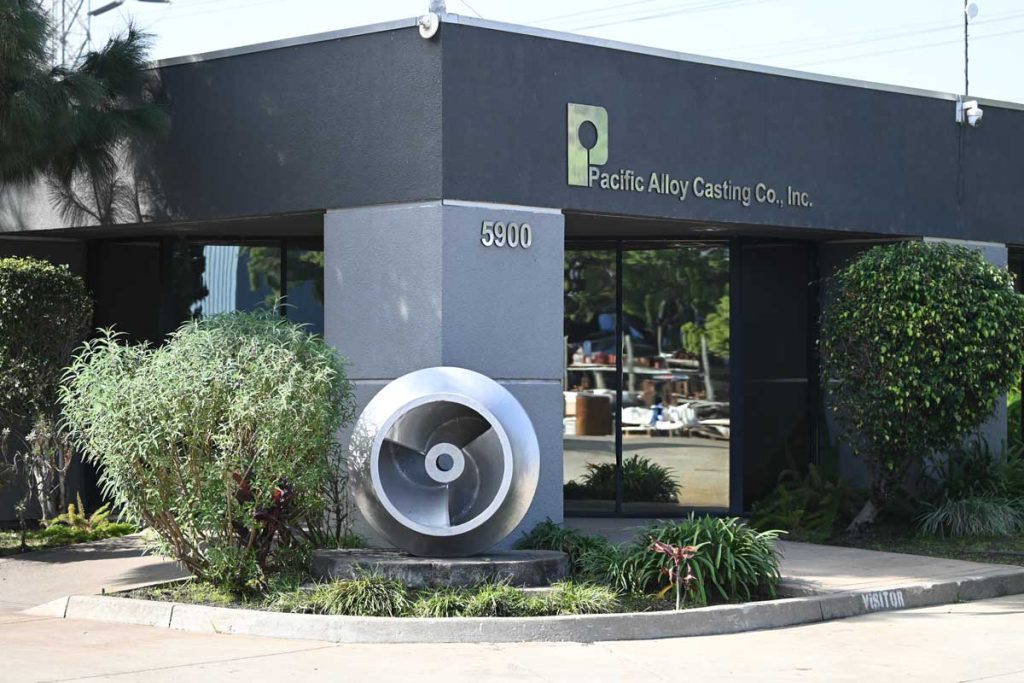
If your application specifies Ni-Hard iron under ASTM A532 or requires guidance selecting the appropriate abrasion-resistant alloy, Pacific Alloy is ready to help.
Discuss Your Casting Requirements
📞 562-928-1387
✉️ sales@pacificalloy.com
Early-stage discussions welcome. NDAs available.