
Pacific Alloy Casting Company manufactures heat resistant steel castings in accordance with ASTM A297, a specification covering iron-chromium and iron-chromium-nickel alloy castings intended for elevated-temperature service.
Heat resistant steels are alloy steels engineered to withstand prolonged exposure to high temperatures without excessive scaling, deformation, or loss of strength. ASTM A297 includes grades formulated with chromium and, in some cases, nickel to improve resistance to oxidation and thermal degradation.
Unlike general-purpose carbon steels, heat resistant steels maintain performance in environments where temperatures exceed the limits of conventional materials.

Heat resistant steel castings produced to ASTM A297 offer:
These characteristics make ASTM A297 alloys appropriate for general-purpose heat-resisting applications.
Typical Applications for Heat Resistant Steel Castings
Pacific Alloy manufactures heat resistant steel components used in applications such as:
Final grade selection depends on operating temperature, atmosphere, and service duration.
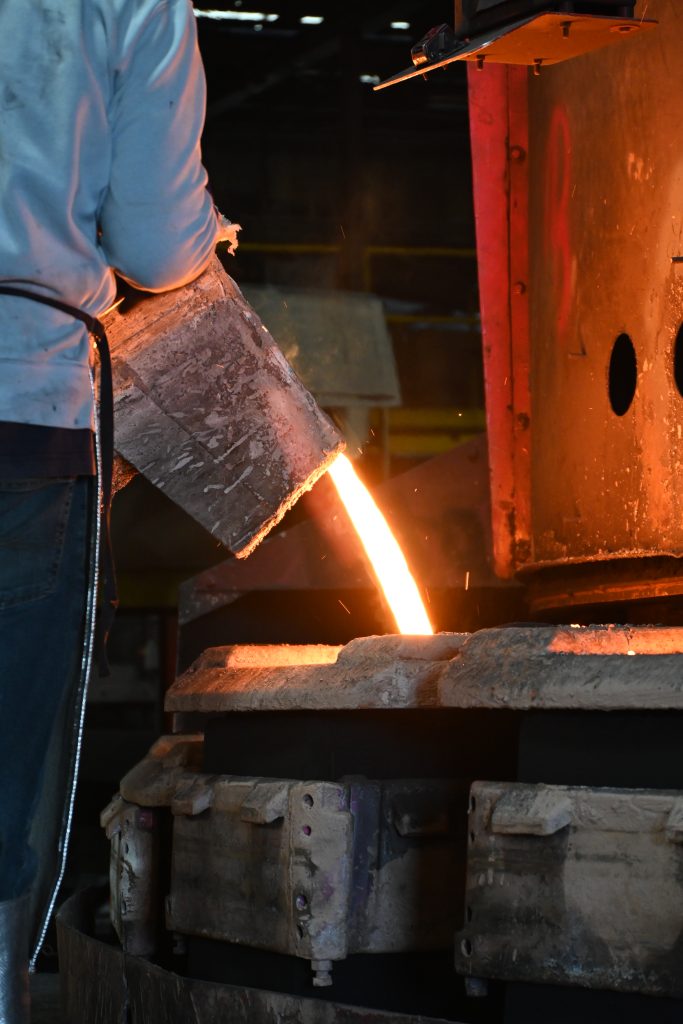
| Property | Detail |
|---|---|
| Common Name / Type | Heat-resistant (HRSC) cast alloys (specified by grade, e.g., HC, HD, HE, HF, HH, HI, HK, HL, HN, HP, HT, HU, HW, HX) |
| Material Class | Cast heat-resistant iron-chromium and iron-chromium-nickel alloys (the "H-series" ACI grades) |
| Grade Designation Basis | ACI "H" prefix = heat service; the second letter rises with nickel content — from straight Fe-Cr (HC, HD) through balanced Fe-Cr-Ni (HH, HK) to high-Ni Fe-Ni-Cr (HW, HX). Higher letters generally mean more nickel and higher-temperature/carburizing capability |
| Key Composition | Cr ~ 8–32% and Ni ~ 0–68% spanning the family; carbon is high (~ 0.20–0.75%) for elevated-temperature creep strength — e.g., HK ≈ 24–28% Cr, 18–22% Ni; HC ≈ 26–30% Cr, low Ni |
| Microstructure | Austenitic, ferritic, or duplex depending on Cr/Ni balance; carbides distributed for high-temperature creep and rupture strength (these are not the low-carbon corrosion grades) |
| Hardness | Grade-dependent — generally ~ 150–225 BHN at room temperature (properties at service temperature are the design basis, not room-temperature hardness) |
| Tensile Strength (room temp) | ~ 60–95 ksi depending on grade — but elevated-temperature creep and stress-rupture strength are the governing design properties, not room-temperature tensile |
| Toughness / Ductility | Variable — many grades have limited room-temperature ductility (high carbon, as-cast carbides); designed for high-temperature strength rather than ambient toughness |
| Standout Property | Resistance to very high temperatures — oxidation, scaling, and creep resistance at sustained service temperatures up to ~ 2000°F+ (1100°C+) depending on grade |
| Heat Treatability | Generally used as-cast; these alloys derive high-temperature strength from composition and carbide structure rather than room-temperature heat treatment |
| Machinability | Poor to fair — high carbon, hard carbides, and work-hardening (austenitic grades) make machining difficult; carbide tooling, rigid setups, and slow speeds required |
| Weldability | Fair, grade-dependent — many grades are weldable with matching high-alloy filler and procedure control, though high carbon and service embrittlement (sigma phase, carburization) complicate repair welding of used parts |
| Corrosion / Oxidation Resistance | Excellent oxidation/scaling resistance at high temperature — the high chromium forms a protective oxide; specific grades selected for oxidizing, reducing, sulfidizing, or carburizing atmospheres |
| Temperature Range | Very high — the defining attribute; grade selection is driven by maximum service temperature and furnace atmosphere |
| Relative Cost | High — rich Cr-Ni content; higher-nickel grades (HP, HT, HW, HX) are the most expensive |
| Best-Fit Applications | Furnace components — radiant tubes, burner parts, hearth plates, furnace rolls, retorts and muffles, heat-treat fixtures and baskets, kiln furniture, and other parts operating continuously at high temperature |
| Not Recommended For | Ambient-temperature corrosion service (use the corrosion-resistant cast stainless grades A351/A743/A744), pressure-containing high-temperature pressure parts (use A217), or applications needing room-temperature ductility/toughness |
Heat resistant steel castings are typically selected when:
For applications requiring both heat resistance and corrosion resistance, austenitic stainless steels may be considered.
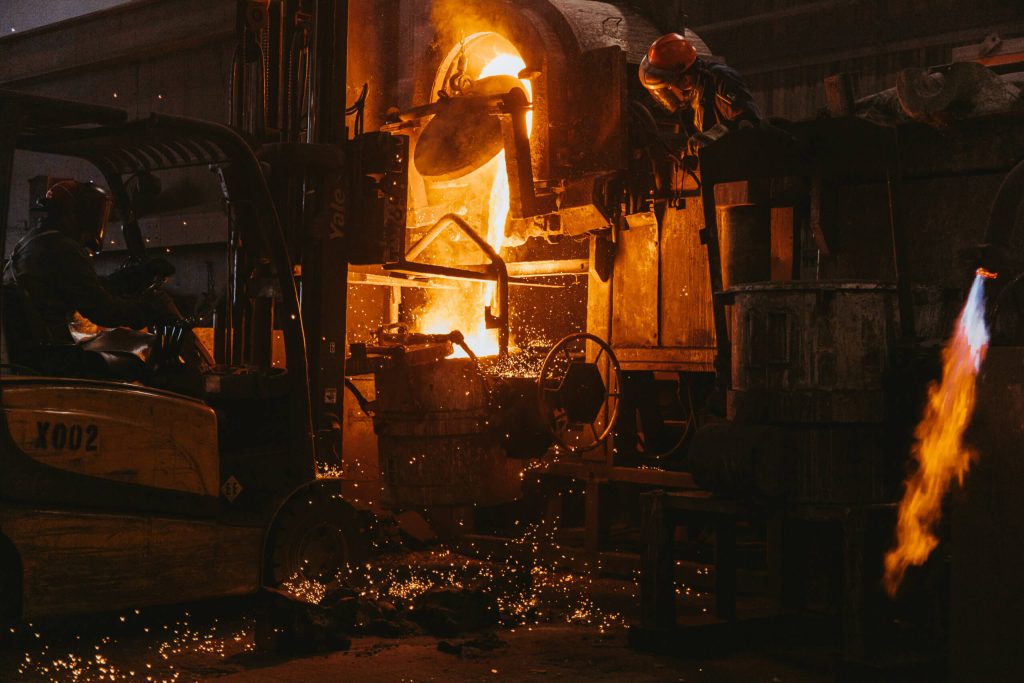

Pacific Alloy Casting Company produces ASTM A297 heat resistant steel castings using controlled foundry practices focused on:
Castings are manufactured to customer specifications and application requirements.
If you’re evaluating abrasion-resistant cast iron materials under ASTM A532 and need support selecting the right alloy for your application, Pacific Alloy is ready to help.
Discuss Your Casting Requirements
📞 562-928-1387
✉️ sales@pacificalloy.com
Early-stage discussions welcome. NDAs available.