
Pacific Alloy Casting Company manufactures cast stainless steel parts for applications that require high strength, toughness, and durability. Stainless steel castings are selected where performance under load, resistance to deformation, and structural integrity are critical to equipment reliability and service life.
This page provides an overview of cast stainless steel materials produced by Pacific Alloy and serves as a gateway to more detailed steel alloy information.

Cast stainless steel is widely used in industrial and structural applications due to its:
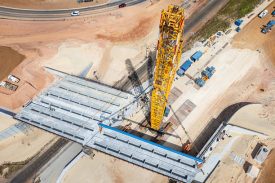

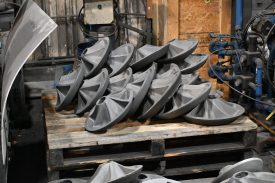
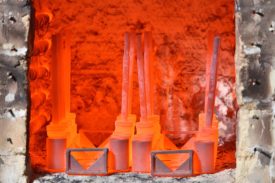
Stainless Steel castings are often selected for applications where iron alloys do not provide sufficient strength or impact resistance, and high resistance to corrosion is called for.
Corrosion-Resistant Steel Castings for Severe Service Applications
Pacific Alloy Casting Company manufactures austenitic steel castings in accordance with ASTM A351, a specification covering corrosion-resistant steel castings intended for pressure-containing and structural applications.
Austenitic steels are commonly selected for environments involving corrosion, elevated temperatures, thermal cycling, or chemical exposure, where carbon steel or cast iron may not provide adequate performance.
Austenitic steel castings produced to ASTM A351 offer:
These properties make austenitic steel suitable for demanding service conditions where material failure would result in downtime or safety concerns.
| Property | Detail |
|---|---|
| Common Name / Type | Austenitic (and some duplex) stainless steel castings (specified by grade, e.g., CF3, CF8, CF3M, CF8M, CF8C, CN7M, CK3MCuN, plus duplex grades like CD4MCu) |
| Material Class | Cast austenitic stainless steel — pressure-containing; cast equivalents of wrought 304/304L/316/316L and related grades |
| Grade Designation Basis | ACI grade codes: first letter C = corrosion-service; second letter indicates Cr-Ni level; numbers/letters denote carbon and additions (e.g., CF8 ≈ cast 304, CF8M ≈ cast 316, CF3/CF3M = low-carbon "L" versions, CF8C = stabilized) |
| Key Composition | (CF8M example) Cr 18–21%, Ni 9–12%, Mo 2.0–3.0%, C ≤ 0.08%, Mn ≤ 1.5%, Si ≤ 1.5%; "3" grades cap carbon at ≤ 0.03% for weld corrosion resistance; balance Fe |
| Microstructure | Austenitic matrix, typically with a controlled small fraction of ferrite (improves castability, strength, and stress-corrosion resistance); CN7M and others fully austenitic |
| Hardness | ~ 140–190 BHN (relatively soft, work-hardens) |
| Tensile Strength | ~ 65–80 ksi depending on grade (CF8/CF8M ≈ 70 ksi min) |
| Yield Strength | ~ 28–37 ksi depending on grade |
| Elongation | ~ 30–35% min — excellent ductility |
| Toughness / Ductility | Excellent — austenitic structure gives high ductility and impact toughness, including very good low-temperature/cryogenic performance |
| Standout Property | Broad corrosion resistance in cast, pressure-rated form — the cast counterparts of 304/316 stainless, with excellent ductility and weldability |
| Heat Treatability | Solution-annealed (heated and rapidly quenched) to dissolve carbides and maximize corrosion resistance — not hardened by heat treatment (austenitic steels harden only by cold work) |
| Machinability | Fair — gummy, work-hardening cut typical of austenitic stainless; requires sharp tooling, positive feeds, and rigid setups; more difficult than carbon steel |
| Weldability | Excellent — readily weldable, especially the low-carbon "L" (CF3/CF3M) and stabilized (CF8C) grades that resist sensitization; a key advantage for fabrication and repair |
| Corrosion / Oxidation Resistance | Excellent — broad resistance to many acids, chlorides (Mo-bearing CF8M/CF3M notably better in chlorides), and oxidizing media; good high-temperature oxidation resistance |
| Temperature Range | Wide — excellent from cryogenic temperatures up through elevated-temperature service; retains toughness at very low temperatures |
| Relative Cost | High — significant chromium, nickel, and (Mo grades) molybdenum content; well above carbon and low-alloy steel castings |
| Best-Fit Applications | Valve and pump bodies, fittings, and pressure-containing parts for chemical, petrochemical, food, pharmaceutical, and cryogenic service; corrosive and clean-process equipment where 304/316-type resistance is needed |
| Not Recommended For | High-strength structural duty (modest yield), severe chloride/stress-corrosion environments better served by duplex (A890/A995), or abrasion service |
Notes: A351 brings stainless steel into cast, pressure-rated form — most of its grades are the casting equivalents of the familiar wrought stainless steels, so CF8 maps to 304, CF8M to 316, and the CF3/CF3M “L” grades give the low-carbon versions that resist weld-zone sensitization. Customers select by corrosion environment: plain CF8 for general service, the molybdenum-bearing CF8M/CF3M where chlorides are present, low-carbon grades where parts will be welded, stabilized CF8C for elevated-temperature service, and specialty grades (CN7M, CK3MCuN) for more aggressive media. The defining strengths are broad corrosion resistance, excellent ductility and cryogenic toughness, and excellent weldability — at the cost of high alloy price and only moderate strength. When chloride pitting or stress-corrosion cracking is the dominant threat, customers step up to the duplex stainless castings (A890/A995), which offer higher strength and better chloride resistance.
Austenitic steel castings produced to ASTM A351 offer:
These properties make austenitic steel suitable for demanding service conditions where material failure would result in downtime or safety concerns.
ASTM A995 duplex stainless steel castings combine high strength with outstanding chloride corrosion resistance in a pressure-rated format, making them the specification of choice for aggressive seawater, brine, and chemical process environments. The balanced austenitic-ferritic microstructure delivers approximately double the yield strength of standard austenitic stainless steel castings, along with significantly superior resistance to chloride pitting, crevice corrosion, and stress corrosion cracking. Pacific Alloy manufactures A995 duplex stainless steel castings for pressure-containing valves, pumps, and fluid-handling components in offshore, marine, chemical, and oil and gas service.
| Property | Detail |
|---|---|
| Common Name / Type | Duplex and super-duplex stainless steel castings (specified by grade, e.g., CD3MN [Grade 4A, cast 2205], CE3MN [Grade 5A, cast 2507 super-duplex], CD3MWCuN [Grade 6A], CD4MCuN [Grade 1B]) |
| Material Class | Cast austenitic-ferritic (duplex) stainless steel — pressure-containing |
| Grade Designation Basis | ASTM "A/B" grade numbers tied to ACI codes; grades increase in alloy content and PREN (pitting resistance) — Grade 4A (2205-type) up through Grade 5A/6A (super-duplex) |
| Key Composition | (CD3MN / 2205-type) Cr 21–23.5%, Ni 4.5–6.5%, Mo 2.5–3.5%, N 0.10–0.30%, C ≤ 0.03%; super-duplex grades raise Cr (~ 24–26%), Mo (~ 3–5%), and N for higher PREN |
| Microstructure | Balanced two-phase structure — roughly 50% austenite / 50% ferrite — which is the source of duplex's combined strength and corrosion resistance |
| Hardness | ~ 217–310 BHN (notably harder than austenitic A351) |
| Tensile Strength | ~ 90–130 ksi depending on grade (2205-type ≈ 90–100 ksi; super-duplex higher) |
| Yield Strength | ~ 60–80+ ksi depending on grade — roughly double austenitic stainless |
| Elongation | ~ 16–25% min depending on grade — good ductility, though below fully austenitic grades |
| Toughness / Ductility | Good — ductile with solid impact toughness at ambient and moderately low temperatures; the ferrite phase limits very-low-temperature use compared to fully austenitic grades |
| Standout Property | High strength and excellent chloride pitting/crevice and stress-corrosion-cracking resistance — the combination austenitic grades can't match |
| Heat Treatability | Solution-annealed and rapidly quenched to balance the austenite/ferrite phases and dissolve detrimental phases — critical; not hardened by heat treatment |
| Machinability | Fair to challenging — high strength and work-hardening make it harder to machine than austenitic stainless; requires rigid setups, sharp tooling, and controlled speeds/feeds |
| Weldability | Good with controlled procedure — weldable but requires careful heat-input control and correct filler to preserve the phase balance and avoid embrittling phases; more procedure-sensitive than austenitic grades |
| Corrosion / Oxidation Resistance | Excellent — superior chloride pitting and crevice resistance (high PREN), and notably better stress-corrosion-cracking resistance than austenitic stainless; super-duplex grades for the most aggressive media |
| Temperature Range | Best from ambient to moderately elevated; prolonged exposure above ~ 300°C (~ 570°F) risks embrittlement (885°F/475°C embrittlement and sigma phase), so not for high-temperature service |
| Relative Cost | High — rich Cr-Ni-Mo-N chemistry; super-duplex grades among the more expensive cast stainless options, though often cost-effective via reduced section thickness from higher strength |
| Best-Fit Applications | Seawater and brine pumps and valves, offshore and marine equipment, chemical and petrochemical process parts, desalination, pulp-and-paper (bleach plant), and oil-and-gas components in chloride-rich, high-pressure service |
| Not Recommended For | High-temperature service (embrittlement risk), cryogenic service (use austenitic A351), or applications where austenitic stainless already suffices at lower cost/easier fabrication |
Notes: A995 is the duplex stainless casting standard — its balanced austenite-ferrite structure delivers roughly double the yield strength of austenitic stainless (A351) together with markedly better resistance to chloride pitting, crevice corrosion, and stress-corrosion cracking. That makes it the material of choice for seawater, brine, and chloride-rich process environments where 316-type castings would pit or crack. Customers select by severity: the 2205-type Grade 4A for most duplex service, and the super-duplex grades (5A, 6A) for the most aggressive chloride and acidic media. The trade-offs are higher cost, more procedure-sensitive welding (phase balance must be preserved), tougher machining, and a temperature ceiling — duplex should not be used hot, where it embrittles, nor at cryogenic temperatures, where austenitic grades are preferred. The higher strength often offsets cost by allowing thinner, lighter sections.
ASTM A890 covers duplex and super-duplex stainless steel castings for general industrial applications, delivering the same combination of high strength and outstanding chloride corrosion resistance as A995 for components where pressure-containing designation is not the governing requirement. The balanced austenitic-ferritic microstructure provides approximately double the yield strength of standard austenitic stainless steel while offering markedly better resistance to pitting and stress corrosion cracking in aggressive environments. Pacific Alloy manufactures A890 duplex stainless steel castings for pump and valve components, impellers, marine hardware, and structural parts in seawater, chemical, and chloride-rich service applications.
| Property | Detail |
|---|---|
| Common Name / Type | Duplex and super-duplex stainless steel castings for general application (specified by grade, e.g., Grade 1B [CD4MCuN], Grade 4A [CD3MN, cast 2205], Grade 5A [CE3MN, cast 2507 super-duplex], Grade 6A [CD3MWCuN]) |
| Material Class | Cast austenitic-ferritic (duplex) stainless steel — general application (non-pressure-specific) |
| Grade Designation Basis | Same family of duplex grades as A995, designated by ASTM grade numbers tied to ACI codes; grades increase in alloy content and PREN (pitting resistance) from standard duplex up to super-duplex |
| Key Composition | (CD3MN / 2205-type) Cr 21–23.5%, Ni 4.5–6.5%, Mo 2.5–3.5%, N 0.10–0.30%, C ≤ 0.03%; super-duplex grades raise Cr, Mo, and N for higher PREN; Cu/W additions in certain grades |
| Microstructure | Balanced two-phase structure — roughly 50% austenite / 50% ferrite — giving the duplex combination of strength and corrosion resistance |
| Hardness | ~ 217–310 BHN (grade-dependent; harder than austenitic stainless) |
| Tensile Strength | ~ 90–130 ksi depending on grade |
| Yield Strength | ~ 60–80+ ksi depending on grade — roughly double austenitic stainless |
| Elongation | ~ 16–25% min depending on grade — good ductility |
| Toughness / Ductility | Good — ductile with solid impact toughness at ambient and moderately low temperatures; ferrite phase limits very-low-temperature use |
| Standout Property | High strength combined with excellent chloride pitting/crevice and stress-corrosion-cracking resistance — specified for general (not strictly pressure-containing) duplex applications |
| Heat Treatability | Solution-annealed and rapidly quenched to balance austenite/ferrite and dissolve detrimental phases — critical; not hardened by heat treatment |
| Machinability | Fair to challenging — high strength and work-hardening make it harder than austenitic stainless; requires rigid setups, sharp tooling, controlled speeds/feeds |
| Weldability | Good with controlled procedure — weldable but requires heat-input control and correct filler to preserve phase balance and avoid embrittling phases; more procedure-sensitive than austenitic grades |
| Corrosion / Oxidation Resistance | Excellent — superior chloride pitting and crevice resistance (high PREN) and better stress-corrosion-cracking resistance than austenitic stainless; super-duplex grades for the most aggressive media |
| Temperature Range | Best from ambient to moderately elevated; prolonged exposure above ~ 300°C (~ 570°F) risks embrittlement (sigma phase and 475°C embrittlement), so not for high-temperature service |
| Relative Cost | High — rich Cr-Ni-Mo-N chemistry; super-duplex grades among the more expensive cast stainless options, though higher strength can reduce section weight |
| Best-Fit Applications | General-service duplex parts — pump and valve components, impellers, propellers and marine hardware, mixer and agitator parts, chemical-process equipment, and structural components in seawater, brine, and chloride-rich environments where pressure rating is not the governing requirement |
| Not Recommended For | High-temperature service (embrittlement), cryogenic service (use austenitic A351), or pressure-containing parts specifically governed by A995 |
Notes: A890 is the general-application companion to A995 — it covers the same duplex and super-duplex chemistries with the same strength and corrosion advantages, but is written for components that are not specifically pressure-containing. The practical distinction is the governing standard rather than the metal itself: when a duplex part is a pressure-containing valve or pump body to a piping code, A995 typically applies; for impellers, propellers, mixer parts, marine hardware, and general corrosion-resistant structural castings, A890 is the appropriate spec. Either way, the customer gets duplex’s hallmark combination — roughly double the yield strength of austenitic stainless plus excellent chloride pitting and stress-corrosion-cracking resistance — with the same trade-offs of high cost, procedure-sensitive welding, demanding machining, and an upper temperature limit. Grade selection follows severity: 2205-type Grade 4A for most service, super-duplex 5A/6A for the harshest chloride and acidic media.
Steel Alloys for Elevated-Temperature and Thermal Service Applications
Pacific Alloy Casting Company manufactures heat resistant steel castings in accordance with ASTM A297, a specification covering iron-chromium and iron-chromium-nickel alloy castings intended for elevated-temperature service.
These alloys are selected for applications where mechanical integrity, oxidation resistance, and dimensional stability must be maintained under sustained heat exposure.
Heat resistant steel castings produced to ASTM A297 offer:
These characteristics make ASTM A297 alloys appropriate for general-purpose heat-resisting applications.
| Property | Detail |
|---|---|
| Common Name / Type | Heat-resistant (HRSC) cast alloys (specified by grade, e.g., HC, HD, HE, HF, HH, HI, HK, HL, HN, HP, HT, HU, HW, HX) |
| Material Class | Cast heat-resistant iron-chromium and iron-chromium-nickel alloys (the "H-series" ACI grades) |
| Grade Designation Basis | ACI "H" prefix = heat service; the second letter rises with nickel content — from straight Fe-Cr (HC, HD) through balanced Fe-Cr-Ni (HH, HK) to high-Ni Fe-Ni-Cr (HW, HX). Higher letters generally mean more nickel and higher-temperature/carburizing capability |
| Key Composition | Cr ~ 8–32% and Ni ~ 0–68% spanning the family; carbon is high (~ 0.20–0.75%) for elevated-temperature creep strength — e.g., HK ≈ 24–28% Cr, 18–22% Ni; HC ≈ 26–30% Cr, low Ni |
| Microstructure | Austenitic, ferritic, or duplex depending on Cr/Ni balance; carbides distributed for high-temperature creep and rupture strength (these are not the low-carbon corrosion grades) |
| Hardness | Grade-dependent — generally ~ 150–225 BHN at room temperature (properties at service temperature are the design basis, not room-temperature hardness) |
| Tensile Strength (room temp) | ~ 60–95 ksi depending on grade — but elevated-temperature creep and stress-rupture strength are the governing design properties, not room-temperature tensile |
| Toughness / Ductility | Variable — many grades have limited room-temperature ductility (high carbon, as-cast carbides); designed for high-temperature strength rather than ambient toughness |
| Standout Property | Resistance to very high temperatures — oxidation, scaling, and creep resistance at sustained service temperatures up to ~ 2000°F+ (1100°C+) depending on grade |
| Heat Treatability | Generally used as-cast; these alloys derive high-temperature strength from composition and carbide structure rather than room-temperature heat treatment |
| Machinability | Poor to fair — high carbon, hard carbides, and work-hardening (austenitic grades) make machining difficult; carbide tooling, rigid setups, and slow speeds required |
| Weldability | Fair, grade-dependent — many grades are weldable with matching high-alloy filler and procedure control, though high carbon and service embrittlement (sigma phase, carburization) complicate repair welding of used parts |
| Corrosion / Oxidation Resistance | Excellent oxidation/scaling resistance at high temperature — the high chromium forms a protective oxide; specific grades selected for oxidizing, reducing, sulfidizing, or carburizing atmospheres |
| Temperature Range | Very high — the defining attribute; grade selection is driven by maximum service temperature and furnace atmosphere |
| Relative Cost | High — rich Cr-Ni content; higher-nickel grades (HP, HT, HW, HX) are the most expensive |
| Best-Fit Applications | Furnace components — radiant tubes, burner parts, hearth plates, furnace rolls, retorts and muffles, heat-treat fixtures and baskets, kiln furniture, and other parts operating continuously at high temperature |
| Not Recommended For | Ambient-temperature corrosion service (use the corrosion-resistant cast stainless grades A351/A743/A744), pressure-containing high-temperature pressure parts (use A217), or applications needing room-temperature ductility/toughness |
Notes: A297 covers the heat-resistant “H-series” cast alloys — high-chromium and chromium-nickel steels formulated specifically to survive sustained high-temperature service. Unlike the corrosion-resistant cast stainless grades (which are low-carbon for ambient corrosion resistance), the H-grades run high carbon to develop the creep and stress-rupture strength that matters at red heat, and they’re generally used as-cast. Customers select the grade primarily by maximum service temperature and the furnace atmosphere (oxidizing, reducing, carburizing, or sulfidizing): lower-nickel grades like HC/HD for oxidizing service, balanced grades like HH/HK as general high-temperature workhorses, and high-nickel grades (HP, HT, HW, HX) for the highest temperatures and carburizing resistance. The trade-offs are limited room-temperature ductility, difficult machining, and high alloy cost. These alloys are about surviving heat, not pressure or ambient corrosion — for high-temperature pressure parts customers use A217, and for ambient corrosion resistance, the standard cast stainless grades.
25% Chromium / 12% Nickel Steel for Extreme Temperature Service
Pacific Alloy Casting Company manufactures Heat Resistant Steel Class 25-12 castings in accordance with ASTM A447. This alloy class is designed for structural components and supports operating in severe high-temperature environments.
Class 25-12 steels are selected when long-term exposure to elevated temperatures requires resistance to oxidation, scaling, and loss of mechanical integrity.
Heat Resistant Steel Class 25-12 castings offer:
For applications exceeding 1800°F (980°C), service temperature requirements should be specified during material selection.
| Property | Detail |
|---|---|
| Common Name / Type | 25-12 chromium-nickel heat-resistant castings (specified by Type I and Type II; corresponds closely to the HH grade of the A297 family / cast 309-type) |
| Material Class | Cast heat-resistant chromium-nickel-iron alloy (high-temperature) |
| Type Designation Basis | Type I and Type II differ in carbon level and structure — Type I (higher carbon) for maximum elevated-temperature strength; Type II (controlled to a more stable austenitic structure) for service requiring better structural stability |
| Key Composition | Cr ~ 24–28%, Ni ~ 11–14% (the "25-12" balance), C ~ 0.20–0.50% (type-dependent), Mn, Si; balance Fe |
| Microstructure | Austenitic (Type II) or austenitic-with-ferrite/carbides (Type I); carbide structure provides elevated-temperature creep strength |
| Hardness | Grade-dependent — typically ~ 150–200 BHN at room temperature (service-temperature properties govern design) |
| Tensile Strength (room temp) | ~ 70–95 ksi depending on type — but elevated-temperature creep and stress-rupture strength are the governing design properties |
| Toughness / Ductility | Moderate at room temperature, type-dependent; designed for high-temperature strength rather than ambient toughness |
| Standout Property | Sustained strength and oxidation resistance at high temperature in the well-proven 25Cr-12Ni balance — a workhorse heat-resistant composition for furnace service |
| Heat Treatability | Generally used as-cast; high-temperature strength comes from composition and carbide structure rather than room-temperature heat treatment |
| Machinability | Poor to fair — high carbon and work-hardening austenitic matrix require carbide tooling, rigid setups, and slow speeds |
| Weldability | Fair to good — the 25-12 (309-type) composition is among the more weldable heat-resistant grades with matching high-alloy filler; service exposure can complicate repair welding of used parts |
| Corrosion / Oxidation Resistance | Excellent high-temperature oxidation and scaling resistance — the 25% chromium forms a stable protective oxide; well suited to oxidizing atmospheres |
| Temperature Range | High — suited to sustained service into the ~ 1900–2000°F (~ 1040–1095°C) range depending on type, atmosphere, and load |
| Relative Cost | High — substantial chromium and nickel content, characteristic of heat-resistant cast alloys |
| Best-Fit Applications | Furnace and high-temperature industrial components — furnace doors and frames, grates, burner and combustion parts, heat-treat fixtures and trays, retorts, and structural furnace parts in oxidizing service |
| Not Recommended For | Ambient-temperature corrosion service (use corrosion-resistant cast stainless), pressure-containing high-temperature pressure parts (use A217), or applications needing high room-temperature ductility |
Notes: A447 is a focused heat-resistant specification built around the proven 25Cr-12Ni (309-type) composition — essentially the HH grade of the broader A297 family, called out in its own standard with Type I and Type II variants. Type I’s higher carbon maximizes elevated-temperature creep strength, while Type II favors a more stable austenitic structure for service where structural stability matters. Like the other H-series alloys, it’s a high-temperature material first: high carbon for creep strength, used as-cast, with the 25% chromium providing strong oxidation and scaling resistance in oxidizing furnace atmospheres. Its 25-12 balance is also among the more weldable of the heat-resistant grades, which helps with fabrication. The trade-offs are the usual ones for this class — limited room-temperature ductility, difficult machining, and high alloy cost. Customers choose A447 when they want this specific, well-understood 25-12 heat-resistant composition for furnace and high-temperature structural parts; for other temperature ranges or atmospheres, the wider grade selection in A297 offers alternatives, and for high-temperature pressure parts, A217 applies.
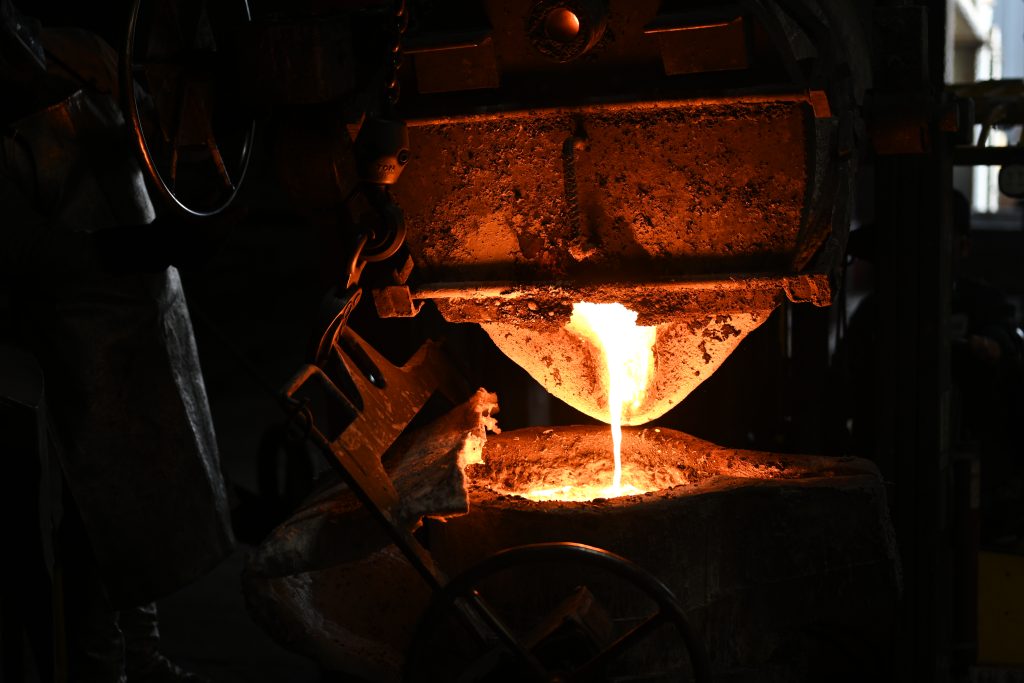
Selecting the right steel alloy is only part of producing a successful casting. Pacific Alloy combines material expertise with controlled manufacturing processes to support:
Additional information on manufacturing processes is available on the Capabilities page.
If you’re evaluating iron castings for a specific application and need guidance on material selection or production capability, Pacific Alloy’s team is available to help.
Discuss Your Casting Requirements
📞 562-928-1387
✉️ sales@pacificalloy.com
Early-stage discussions welcome. NDAs available.